Our Story
The Origin of inABLE
Assistive Learning Technologies to Advocating for People with disabilities
“A sincere request for Braille books at a small rural library opening in 2008 led to the creation of inABLE, a 501c nonprofit organization based in the USA and Kenya.”
The inspiration behind inABLE began when the founder - Irene Mbari-Kirika - hosted a reading day at the Kenya National Library. A group of students who were very competitive, intelligent, and outgoing captured her attention. One of these groups emerged victorious in the reading challenge for the day. Yet, to her surprise, Irene learned these students were all blind or with low vision. Interacting with them opened her eyes to the plight of students with visual impairment.
For example, she learned from their teacher that there was an acute shortage of braille books and resources for visually-impaired students countrywide. In addition, due to cost, a single braille textbook had to be shared among four or more students, not to mention that braille books are so bulky that carrying them to class is burdensome.
This inequality spills over to the workplace. Students in Africa graduate from college to join a workforce that is oblivious to braille. Something had to be done, and this got Irene thinking. Chiefly, she was driven by the urgent need to connect students with visual impairment to the rest of the world by breaking the barriers to communication and employment.
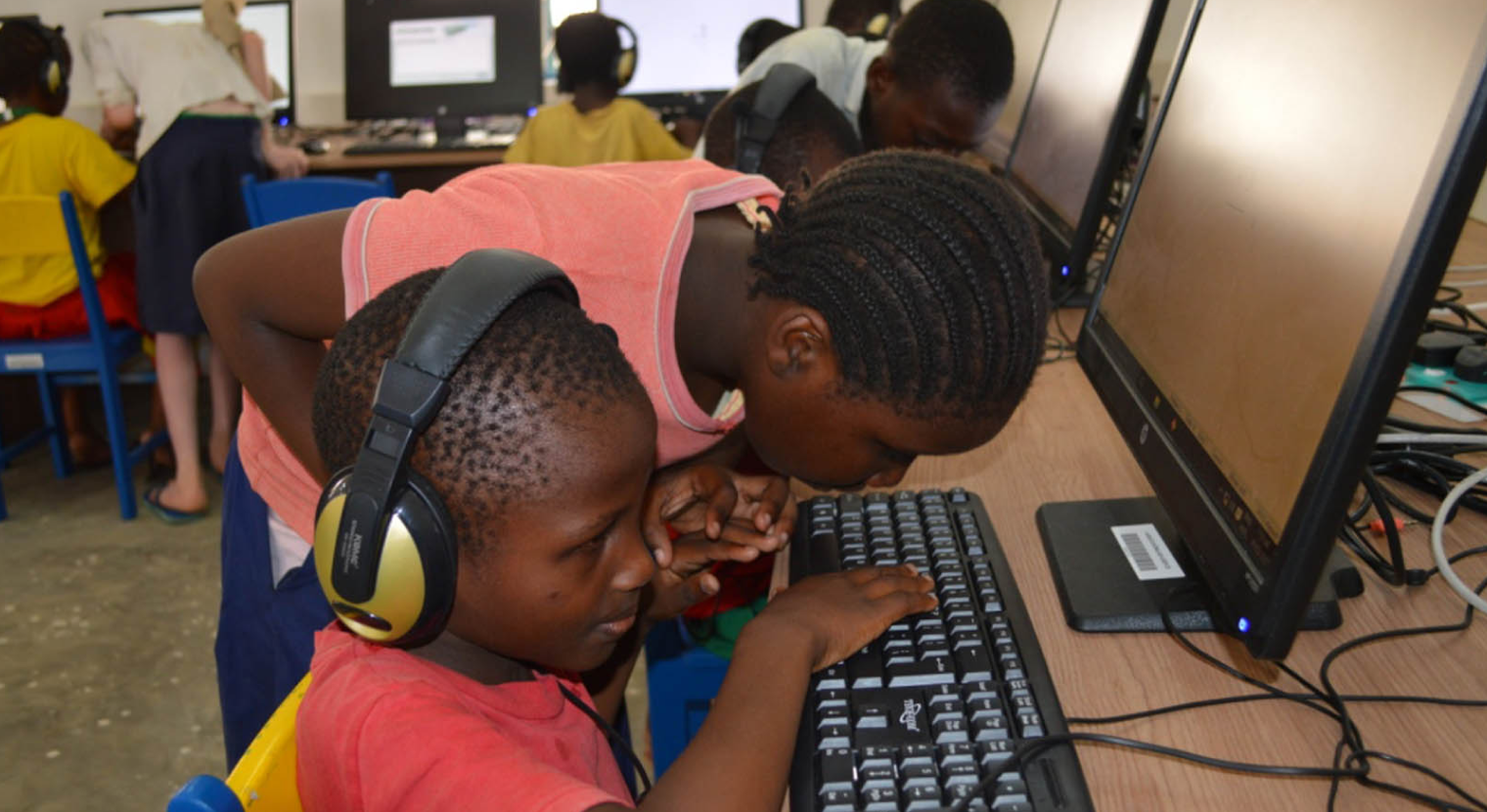
To achieve this and help them develop modern-day skills, Irene established the first assistive technology lab at Thika Primary School for the blind and enrolled 100 students. It was an instant success! When taught basic computer skills, the students could immediately utilize various applications, including sending emails and reading online newspapers. This encouraged Irene to keep going and look for more ways to make education inclusive for visually impaired students.
More than a decade later, inABLE’s mandate has widened and now we envision a world where individuals with disabilities have access to the same educational, technological, and employment opportunities as the non-disabled. In addition, we envision a world where blind and low-vision children do not end up in the streets but become contributors to culture and society.
To date, inABLE has established eight assistive technology computer labs, hired and trained 20 assistive technology computer instructors, and enrolled over 12,000 blind and visually impaired students.